The Effect of Epigenetics on Human Health
Henry Tsai '26
Introduction:
Scientific researchers investigated two genetically identical male twins that carried the same X-linked mutation in the adrenoleukodystrophy (ALD) gene in 1996, observing that one developed blindness, balance problems, loss of the protein myelin in the brain, features of the lethal neurological disease, while the other twin remained healthy. The investigators concluded that “some nongenetic factors may be important for different adrenoleukodystrophy phenotypes” (Zoghbi and Beaudet, 2016). In other words, since the DNA sequence of the twins were identical, environmental factors must have played a role in influencing how the genes were expressed. In recent years, much attention has been given to the field of epigenetics, originally defined by Conrad Waddington in the 1950s as “the branch of biology that studies the interactions between genes and their products that bring the phenotype into being” (Feinberg, 2018). The definition of epigenetics now incorporates the idea that the environment has an effect on DNA modification and gene expression while playing a major role in human health and the development of diseases.
The Three Major Forms of Epigenetic Modification:
● DNA methylation, an epigenetic mechanism that predominantly occurs in CpG islands (regions of DNA that consists mostly of GC content), plays a significant role in diseases and biological development (Lu et al., 2020). It typically causes gene silencing by adding methyl groups to the cytosine base’s pyrimidine ring, which prevents access of transcription factors to the binding sites of DNA and thus leads to repressive gene
expression. If a tumor suppressor gene is silenced, the organism is likely to develop cancer.
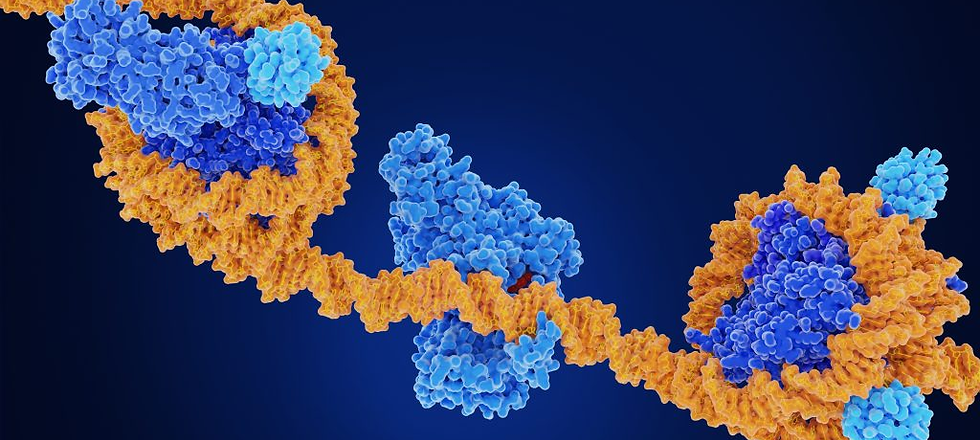
● Histone acetylation is a mechanism that relies on the fact that positively charged lysine residues on the H3 and H4 histones cause a tight packaging of negatively charged DNA with histones (Lu et al., 2020). When in the form of chromatin, DNA is “packaged into a highly compact structure wrapped with histone octamer” and creates “the so-called ‘beads on a string’ structure, which facilitate[s] controlling the accessibility of DNA sequence.” However, the addition of an acetyl group can loosen the tight chromatin structure and allow transcription factors to bind to a strand of DNA.
● Non-coding RNAs (ncRNAs) — which compose at least 70% of the human genome — have regulatory effects in gene expression (Lu et al., 2020). Although ncRNAs were initially “considered as ‘junk transcripts’ upon their discovery,” they are actually “critical mediators in biological robustness by buffering off the small perturbations, thus ensuring homeostasis of organisms.” Most protein-coding genes in humans are affected by the regulation of microRNA (miRNA), RNA molecules that downregulate gene expression by binding to the 3’ UTR of target mRNA. However, miRNA is often susceptible to other epigenetic modifications because they are frequently located near CpG islands (Lu et al.).
Relationship Between Environment, Lifestyle, and Epigenetic Information:
Through epidemiologic studies, researchers have found evidence proving a relationship between diet in early life and long term health.
We now know that a poor diet or starvation can cause major epigenetic changes, leading to disease states. Folic acid and vitamin B 12 are important nutrients needed in the diet for the synthesis of methionine and S-adenosylmethionine (SAM),which is the methyl donor required to maintain DNA methylation patterns (Alegría-Torres et al., 2011). Furthermore, we know that low dietary folate intake is associated with an increased risk of colon cancer. Alternatively, a diet high in fat affects DNA methylation in fat cells, leading to a host of medical problems (Feinberg, 2018). Individuals exposed to nicotine and other toxins from smoking, sustain substantial epigenetic changes which affect gene expression involved in pulmonary function and cancer development.
Significance of Studying Epigenetics and Future Directions:
The scientific community believes that environmental factors account for 80% of disease risk in people (Feinberg, 2018). For example, diet, smoking, and environmental factors that cause inflammation, are risks that lead to common disease such as type 2 diabetes, cancers, autoimmune disease, and respiratory disease and the study of epigenetics gives us an understanding of how genes and environment interact.
Epigenetics has provided a target for cancer therapeutics, such as the hypomethylating agents 5-azacitidine and decitabine in the treatment of myelodysplastic syndrome and acute myelogenous leukemia. Scientists are hopeful that in the future epigenetic analysis can also be used to predict response to specific treatments and shed light on the relationship between a person’s genome and their environment, allowing clinicians to assess disease risk and intervene before disease takes its toll on health.
References
Alegría-Torres, Jorge Alejandro, et al. “Epigenetics and Lifestyle.” Epigenomics, vol. 3, no. 3, June 2011, pp. 267–77, https://doi.org/10.2217/epi.11.22. Accessed 21 Jan. 2024.
Feinberg, Andrew P. “The Key Role of Epigenetics in Human Disease Prevention and Mitigation.” New England Journal of Medicine, edited by Dan L. Longo, vol. 378, no. 14, Apr. 2018, pp. 1323–34, https://doi.org/10.1056/nejmra1402513. Accessed 21 Jan. 2024.
Lu, Yuanjun, et al. “Epigenetic Regulation in Human Cancer: The Potential Role of Epi-Drug in Cancer Therapy.” Molecular Cancer, vol. 19, no. 1, Apr. 2020, https://doi.org/10.1186/s12943-020-01197-3. Accessed 21 Jan. 2024.
Moosavi, Azam, and Ali Motevalizadeh Ardekani. “Role of Epigenetics in Biology and Human Diseases.” Iranian Biomedical Journal, vol. 20, no. 5, Pasteur Institute, Nov. 2016, pp. 246–58, https://doi.org/10.22045/ibj.2016.01. Accessed 21 Jan. 2024.
Zoghbi, Huda Y., and Arthur L. Beaudet. “Epigenetics and Human Disease.” Cold Spring Harbor Perspectives in Biology, vol. 8, no. 2, Feb. 2016, p. a019497, https://doi.org/10.1101/cshperspect.a019497. Accessed 21 Jan. 2024.