Benefits and Drawbacks of Composting
Shloka Chodhari '26
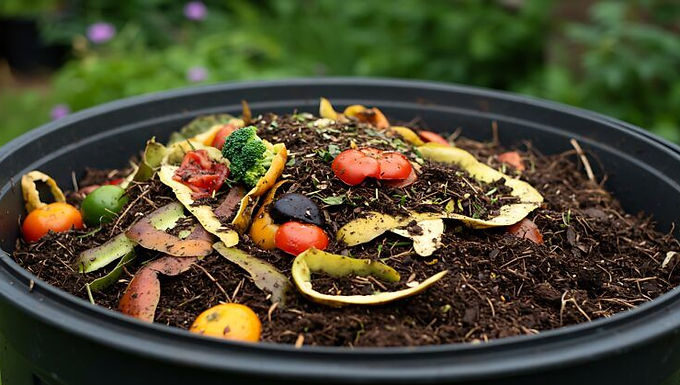
Composting is the process by which recycling matter such as leaves and food scraps turn into a valuable fertilizer that can work towards enriching soil as well as plants. It is known that “anything that grows decomposes eventually” so in simple terms composting leads to the speeding up process of creating an environment for bacteria, fungi and other organisms (decomposing) in order for them to do their work (James, 2021). Composting can be defined as “nature’s way of recycling.” It is one of the most powerful actions that individuals can take in order to reduce the trash and address climate change. By turning in food scraps accumulated from meals into compost, we can transform our waste in an organic way.
There are various benefits in composting as it is known to be a “resourceful way to recycle food scraps”(Sawden, 2020). By doing this you are not only putting your food waste to leave a beneficial impact on the environment, but it also provides a more sustainable base at home. Additionally, you are ultimately reducing the volume of materials that might otherwise be disposed of in landfills, “this includes leaves, grass, clippings, and food scraps''(Sawden, 2020). “An average American family of four throws out about $150 worth of food per month, [this is a] 50% increase since the 1970’s”(James, 2021). The best way to reduce food scrap’s various impacts is compositing as it recycles the wastes instead of throwing it into the trash. This will decrease the overall levels of detrimental greenhouse gasses in our atmosphere. Composting is a very simple and easy process and involves minimal effort, though it provides many benefits! You can use your compost to build healthier soil, conserve water and improve plant growth as well–composting is a great way to recycle organic waste that is generated at home. “Food scraps and garden waste combined make up more than 28% of what we throw away”( U.S Environmental Protection Agency). As food is the biggest source of waste in the United States, it is a burden on the environment, and processing it is extremely costly. “The average cost to landfill municipal solid waste in the United States was around $55 per ton in 2019.” “The United States generates more than 367 million tons of municipal waste since 2017 and sends two thirds of that to landfills” (U.S Environmental Protection Agency). This ultimately comes out to be a big cost expense, which is precisely over a billion dollars dedicated to waste management. The benefits of composting at home allows for individuals to divert some of that waste from landfills to turn it into something sustainable and environmentally friendly for our yards. Additionally, composting helps the overall soil health and lessens erosion. Compost is an “essential tool for improving large-scale agricultural systems”(McCloy, 2019). Compost contains three primary nutrients needed by crops: nitrogen, phosphorus and potassium. Instead of relying on harmful deadly chemicals, compost itself offers a completely organic alternative. Agriculture is a “major consumer of water in the United States, accounting for approximately 80% of the nation's water use” (McCloy, 2019).The use of irrigation systems are effective but are pricey and time consuming for individuals. With this, “water is becoming increasingly difficult to obtain across the globe”(McCloy, 2019).This can be solved with the benefits of compost as “the water retaining capacity of soil increases with the addition of organic matter….1% increase in soil organic matter helps soil hold 20,000 gallons more water per acre”(Hu, 2020).With the use of compost to foster healthy soil, farmers do not need to exploit the usage of water.
Along with the many benefits, composting comes with drawbacks as well as negative impacts. Decomposing food scraps can cause acrid odor, which could make land inhabitable for animals. Composting is not such an easy job as it often involves labor. “This includes transporting your food scraps from the kitchen and turning the pile once or twice a week to manage moisture and distribute oxygen” (Hu, 2020). Composting must remain consistent, which t requires a significant amount of maintenance. Additionally, composting is a timely process, “...it can take anywhere from six months to one year to finish compost” (Hu, 2020). Due to these reasons, many individuals are not inclined to compost, leading them to prefer and buy harmful chemical fertilizer. Additionally, decomposing food draws in rodents as “the odors emanating from open bins and exposed heaps” will grab their attention (Hu, 2020).
Apart from the drawbacks on the impacts of composting, greenhouse gasses are a vital aspect. When organic matter decomposes it breaks down by microorganisms that require oxygen. During this process of decomposition, “biogas is created as a by-product. This biogas is…50% methane and 50% carbon dioxide.”Both of these gasses are strong greenhouse gasses. “...methane is 28-36 times more effective than carbon dioxide in trapping heat into the atmosphere for over a century. Due to the solid waste infrastructure, “only about 6% gets composted. Since 2000, San Francisco established a large composting program and it was able to “divert 50% of its waste from landfills”(Clark). Since then, the state has been “diverting more than 80% of waste from landfills since 2012.” This proves that more than “90,000 metric tons of carbon emissions are avoided each year.” By reducing food waste composting also will help reduce greenhouse gas emissions that affect climate change and or global warming. “Food loss and waste generate an estimated 8-10 percent of global greenhouse gas emissions” (Clark).
Although there are a few drawbacks to composting, all in all there are far more pros. Composting is definitely worth it to anyone who hopes to develop or achieve a more eco friendly and sustainable lifestyle!
References
Sawden, E. (2022, August 31). [Is composting worth the effort]. Retrieved January 30, 2024, from https://lomi.com/blogs/news/
Is-composting-worth-the-effort
James, M. W. (2021, July 27). How composting can reduce our impact on the planet. Retrieved January 30, 2024, from https://www.unep.org/ news-and-stories/story/how-composting-can-reduce-our-impact-planet
McCloy, J. (2019, August 19). Composting pros and cons: Is this effective. Retrieved January 30, 2024, from https://greencoast.org/
composting-pros-and-cons/
Hu, S. (2020, July 20). Composting 101. Retrieved January 30, 2024, from https://www.nrdc.org/stories/composting-101#benefits
Clark, G. R. (Ed.). (2023, December 18). Reduce, reuse, recycle. Retrieved January 30, 2024, from https://www.epa.gov/recycle/composting-home
Is Composting Worth the Effort: 12 Pros and Cons You Should Know – Lomi How composting can reduce our impact on the planet (unep.org) Composting Pros And Cons: Is This Effective? - Green Coast Composting 101 (nrdc.org)
Composting At Home | US EPA