Breakthroughs in Sustainable Hydroponic Growing
Gabriel Vermut '27
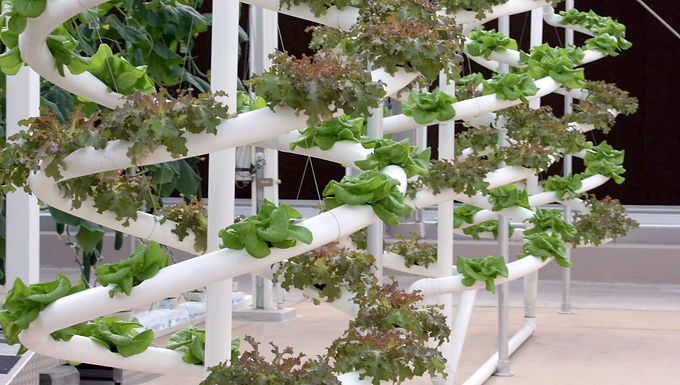
A highly debated alternative form of agriculture, hydroponic systems grow plants without soil. These systems allow for an effective use of inputs by delivering the nutrient-rich solution directly to plant roots containing nitrogen, phosphorus, and potassium. As such, hydroponics holds a lot of promise in ensuring plentiful food production, particularly in areas with limited resources or water supplies and restricted land area.
One of the biggest advantages of hydroponic systems is their efficiency of water usage. Traditional methods of farming can waste quite a bit of water with great quantities lost to evaporation and runoff. Hydroponics, on the other hand, works by recycling water and nutrients within a closed-loop system. This approach can result in water savings as high as 90% compared to conventional soil-based agriculture (Rajaseger et al., 2023). Such efficiency makes hydroponics an attractive option in regions that are suffering from water shortages.
The most important growth factor for plants is lighting, especially indoors in hydroponics. More recently, advancements in LED technology have created a closer relationship between LEDs and the natural sunlight spectrum. These new LED grow lights can change the colors of light they produce depending on how they want the plant to grow, enabling growers to adjust the lighting according to the different growth stages for better health and output of the plant.
Most of the new hydroponic systems are integrated with renewable sources of energy for added sustainability. This would, in turn, lower the rate of greenhouse gas emissions and dependence on fossil fuels by using hydroponic farms powered by solar, wind, or geothermal energy. Integration will make such systems more environment-friendly and also possibly bring cost benefits in the future.
The integration of intelligent technologies within hydroponics has led to the invention of automated systems enabling the monitoring and controlling of different environmental variables. Sensors connected to IoT—the Internet of Things, the network of devices and objects connected over the internet—would track factors such as pH levels, temperature, humidity, and nutrient concentrations in real time (Austria et al., 2023). The sensors bring about automated adjustments that create optimal growing conditions, reduce labor, and subsequently minimize waste of resources.
Traditional hydroponics still employs substrates for mechanical support of plants. Recent technologies have introduced newer substrate materials capable of sustainable options: foam substrates. Essential in their makeup, hydroponics are just some of the newer characteristics that fit into both amateur and professional contexts.
Certain remarkable projects, as seen with Science Barge of New York or Nemo's Garden in Italy, are bringing about fantastic concepts of eco-sustainable systems by using hydroponics. The Science Barge is a floating urban farm powered by hydroponics, solar panels, wind turbines, and biofuels (Wikimedia Foundation, 2024). The barge is more of an educational tool that can show how to grow food sustainably in an urban environment. Nemo's Garden does things a bit differently, growing their plants in underwater biospheres and taking advantage of stable temperatures and high humidity for an ideal environment to grow their plants (Wikimedia Foundation, 2023). These initiatives demonstrate the adaptability and versatility of hydroponic systems to suit different environments.
Although hydroponics have many benefits, hydroponic systems have their downsides, including high initial investment costs and a need for technical expertise. Continuing research is, therefore, aimed at solving some of these challenges by introducing cheaper methodologies and user-friendly technologies. Constantly developing, hydroponics will surely be a part of future sustainable agriculture with novel manners of meeting the increasing global demand for food with minimal environmental degradation.
References
Admin. (2023, August 25). Innovations in hydroponics: A deep dive into emerging technologies: Greenhouse Automation Systems. Climate Control Systems.
https://climatecontrol.com/innovations-in-hydroponics-a-deep-dive-into-emerging-techno logies/
Austria, A. C. H., Fabros, J. S., Sumilang, K. R. G., Bernardino, J., & Doctor, A. C. (2023, May 2). Development of IOT smart greenhouse system for hydroponic gardens. arXiv.org. https://arxiv.org/abs/2305.01189
Rajaseger, G., Chan, K. L., Yee Tan, K., Ramasamy, S., Khin, M. C., Amaladoss, A., & Kadamb Haribhai, P. (2023, September 30). Hydroponics: Current trends in sustainable crop production. Bioinformation.
https://pmc.ncbi.nlm.nih.gov/articles/PMC10625363/#:~:text=Hydroponic%20farming% 20techniques%20have%20been,promoting%20sustainability%20and%20minimizing%20 waste.
Wikimedia Foundation. (2023, December 31). Nemo’s garden (noli). Wikipedia. https://en.wikipedia.org/wiki/Nemo%27s_Garden_%28Noli%29
Wikimedia Foundation. (2024, April 27). Science barge. Wikipedia.
https://en.wikipedia.org/wiki/Science_Barge