Global and Local Human Environmental Impacts
Shloka Chodhari '26
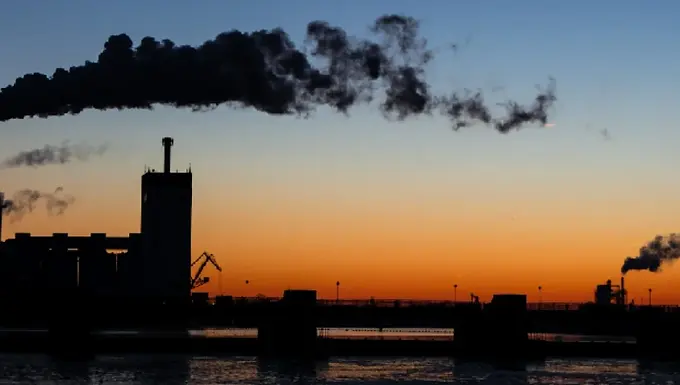
When human numbers and or populations were small, the "impact on the environment was local" (Evans, 2019). However, as the population increases, many world characteristics are advancing. This includes the refinement of technology as well as the strain on nature. "With the global population projected to grow substantially through the end of the century, humanity's footprint on the environment is likely to increase" (Evans, 2019). Human activities facilitate numerous changes throughout sea and land use globally. The continuous use of natural resources has caused exceptional levels of environmental devastation, which includes "the loss of ecosystems [as well as] biodiversity" (Evans, 2019).
Greenhouse gasses radiated from the land, "and the escalating use of fossil fuels are elevating Earth's temperature faster than ever since the dawn of civilization" (Evans, 2019). Due to the consequences of global warming, human activity as "the earth's capacity to supply food and fresh water and maintain human health, is intolerable" (Evans, 2019). People had surface effects on the global climate for most of human life. "Starting around 175, growing and industrializing populations ramped up burning of fossil fuels" (Evans, 2019). For the past few years, fossil fuel use has rapidly grown. "In the past 270 years, humans have released enough greenhouse gasses into the atmosphere to raise the average global temperature by about 1 degree Celsius" (Evans, 2019); due to which the global population has more than duplicated. The impacts of global warming have a combination of outcomes on various places looking at a global scheme, though they include "wildfire seasons, tropical storms, heatwaves, rising sea levels, etc." (Evans, 2019).
Regarding human activities, overpopulation is also influencing the environment. Overpopulation is a persistent problem "since mortality rates have decreased, medicine has improved, and industrial farming methods were introduced" (Alexander, 2020). Combined with all factors, this keeps us humans alive for much longer, increasing the Earth's total population. However, overpopulation's effects include the "degradation of the environment" (Alexander, 2020). Generally conveying, humans mandate much space for farmland and municipalities, which also takes up much space. "An increased population results in clearer-cutting, severely damaging ecosystems" (Alexander, 2020). This effect, in short, tees to "filter the air" (Alexander, 2020). With this, the levels of CO2 will increase, which is highly damaging to the environment.
Pollution is also an overreaching issue concerning human activity's impacts on the Earth. Pollution levels have worsened yearly, and to this day, "2.4 billion people do not have access to clean water sources" (Alexander, 2020). Air is the most polluted, with the data that the "US produces [es] 147 million metric tons of air pollution each year alone" (Alexander, 2020). Although the air quality in the US is essential in bits and pieces, "the rate in developing countries continues to plummet as song continuously blocks out the sun in a dense shroud of pollution" (Alexander, 2020). Not only air pollution contributes to the global and local impacts on the environment, but "there are 5.25 trillion pieces of plastic debris in the ocean" (Alexander, 2020). The excessive amounts of fertilizer swamped in the sea are dumped "into the largest producer of the oxygen we have" (Alexander, 2020). Fertilizers contain nitrogen, which, believe it or not, is a vital element for the growth of plants. "Phytoplankton and algae thrive off of nitrogen, causing excessive growth…in areas with a high concentration of nitrogen" (Alexand,2020). Brown tides are created by the "rapid growth of billions of algae, which deplete water bodies of oxygen" (Alexander, 2020).
Humans contribute to human activity's global and local environmental impact in different ways, varying from pollution to greenhouse gasses. Changes like these have "triggered global warming, poor air quality, and triggered climate change" (National Geographic, 2023). These impacts presently impact human behavior negatively, though, as a whole, we should work on overcoming these issues with small deeds and establishing practical tasks daily.
References:
Alexander, D. (2020, June 22). 11 important ways that humans impact the earth's environment. Retrieved May 14, 2023, from
https://interestingengineering.com/science/11-ways-humans-impact-the-environment
Evans, H., & Larson, J. (2019). Humans impact on the environment: A focus on
climate change. Retrieved May 14, 2023, from
https://populationconnection.org/resources/human-activities-and-climate-change/ #:~:text=When%20human%20 numbers%20where%20 small%2C%20 our%20impact%20on,harvesting% 20of%20organisms%3B%20pollution%3B%20and%20invasive%20species%20introductions.
Human impacts on the enviornment. (n.d.). National Geographic. Retrieved May 14, 2023, from https://education.nationalgeographic.org/resource/ resource-library-human-impacts-environment/