Vision AI to Advance Coral Reef Conservation
Aadya Agarwal '29
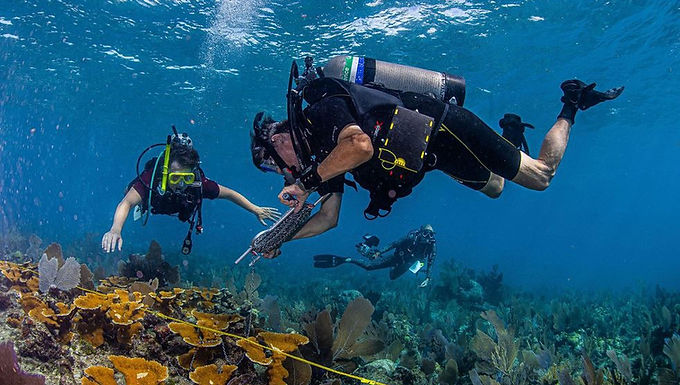
Several domains across the globe have begun to integrate AI technology. From helping people automate everyday tasks like drafting emails to powering algorithms that predict disease risk in patients, AI can be an extremely powerful tool when used ethically and safely. One novel breakthrough involves the application of AI to marine biology and conservation ecology; AI is currently helping restore coral reef ecosystems that have been threatened by climate change.
Climate change is the process by which greenhouse gases trap heat in the earth’s atmosphere, thereby causing an increase in the environment’s temperature and other negative impacts (United Nations, 2025). Marine ecosystems are especially susceptible to climate change. Specifically, the increase of carbon dioxide levels in the atmosphere causes ocean acidification, which happens when carbon dioxide, produced through human activities like burning fossil fuels for energy, is absorbed by the ocean (Tarakanov, 2022). This CO2is then converted into carbonic acid, which increases water acidity and adversely affects marine ecosystems. In particular, ocean acidification decreases the concentration of carbonate ions in marine ecosystems, which threatens coral reefs’ ability to form calcium carbonate skeletons (OCEANA, n.d.). This process, in turn, increases coral’s susceptibility to extreme weather events, resulting in slower growth.
Additionally, many reefs have also experienced coral bleaching, an effect caused by rising ocean temperatures. Coral bleaching occurs when a prolonged exposure to elevated temperatures causes coral reefs to release zooxanthellae, a colorful algae that lives in their tissues. Since zooxanthellae are the main source of energy for coral and are responsible for their vibrant colors, their expulsion introduces the risks of starvation and discoloration for the coral (National Oceanic and Atmospheric Administration, 2024). Widespread coral bleaching has grown exponentially. During the 2023-2025 bleaching uprise, the survival of nearly 84% of coral reefs worldwide were threatened, serving as the most “extensive” coral crisis ever recorded by the National Oceanic and Atmospheric Administration (NOAA)’s Coral Reef Watch data (Coral Restoration Foundation, 2025). Since coral reefs help maintain biodiversity, conservation efforts, such as stronger coastal protections and sustainable fishing practices, are more important than ever.
Recently, the Australian Institute of Marine Science (AIMS) has been working towards creating a solution to coral degradation. While the researchers have previously developed certain methods to optimize aquaculture, a field focused on cultivating aquatic organisms under controlled conditions, AIMS is now attempting to combine technology with its conservation mission (AIMS, 2025). To achieve that goal, they have released the Deployment Guidance System (DGS), which aims to deploy coral-seeding devices from a vessel into areas in ocean ecosystems where coral is most likely to thrive. This strategy maximizes the chances for the coral to reach adulthood, thereby building the ecosystem’s resilience to external stresses such as hurricanes and rising temperatures. Identifying optimal locations and planting seeds by hand without the aid of technology would not have been scalable to the level needed in the Great Barrier Reef, making the DGS a step in the right direction. During the release of coral seeds into their natural ecosystems, cameras, AI analysis, and data provided by oceanographic and ecological observations help determine the optimal time frame for the process to take place.
While autonomy is a key aspect of this innovation, human involvement is built-in through a geo-tagging feature. This addition allows scientists to track the location at which the coral was deployed to measure progress over years and provide manual intervention if needed. AIMS project engineer Dr. Ben Moshirian remarks, “This technology is not about machines replacing humans. It is about humans working with machines, to give our science impact at a scale which was difficult to achieve previously” (AIMS, 2025). Overall, the DGS is a strong initiative to protect coral reefs from climate change as this global problem continues to rapidly intensify.
References
CRF. (2025, October 28). The 2025 Tipping Point Report: A Call to Accelerate - Coral Restoration Foundation. Coral Restoration Foundation.
https://coralrestoration.org/the-2025-tipping-point-report-a-call-to-accelerate/ How Carbon Emissions Acidify Our Ocean | IAEA. (2022, December 15). Iaea.org. http://www.iaea.org/bulletin/how-carbon-emissions-acidify-our-ocean
Humans are working with robotics and AI to restore coral reefs at scale. (2025). AIMS. https://www.aims.gov.au/information-centre/news-and-stories/humans-are-working-robot ics-and-ai-restore-coral-reefs-scale
National Oceanic and Atmospheric Administration. (2024, June 16). What Is Coral Bleaching? Noaa.gov; NOAA. https://oceanservice.noaa.gov/facts/coral_bleach.html Oceana. (2024). Effects of Ocean Acidification on Corals. Oceana USA.
https://usa.oceana.org/effects-ocean-acidification-corals/
United Nations. (2025). What is Climate Change? United Nations.
https://www.un.org/en/climatechange/what-is-climate-change