Water Contamination with Arsenic in Rural Bangladesh
Madisen Kim '27
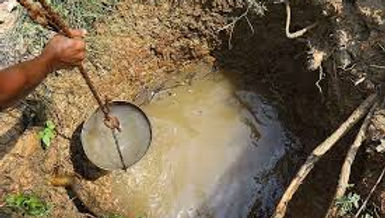
Since the 1990s, the World Health Organization (WHO) has called Bangladesh’s arsenic-contaminated drinking water “the largest mass poisoning in history” (Battling “the Largest Mass Poisoning in History,” n.d.). In Bangladesh’s rural districts and villages, a staggering 50 million people have been exposed to contaminated drinking water, with arsenic levels exceeding WHO’s guideline of 10 micrograms per liter.
Arsenic, a common but toxic heavy metal pollutant, leaches from the Earth’s crust as a naturally occurring mineral into groundwater reservoirs (Battling “the Largest Mass Poisoning in History,” n.d.). It cannot be tasted or smelled, making it easy for people to unknowingly consume drinking water laced with the chemical (“Lower Arsenic in Drinking Water,” 2025).
At a high concentration, arsenic proves extremely toxic to humans. In a 20-year study surveying more than 11,000 adults in Bangladesh, researchers from Columbia University and New York University were able to record arsenic levels in the urine of participants exposed to high levels of arsenic, as well as their subsequent causes of death, in comparison to individuals with reduced arsenic exposure (Wu et al., 2025). This study compared the health implications of households relying on contaminated water from tube wells and those who switched to safer water sources. Conducted from 2002 to 2022, the research documented inhabitants of Bangladesh’s sub-district Araihazar, proving that lower arsenic levels in drinking water reduced death from heart disease, cancer, and other chronic illnesses by 50% (“Lower Arsenic in Drinking Water,” 2025).
Even after accounting for age, smoking, and socioeconomic factors, participants who lowered their arsenic exposure still saw a lower risk of death from chronic diseases. Researchers also noted that the health risks associated with arsenic exposure do not disappear completely, but decline steadily over time.
Regarding the significance of the study, the co-lead author, Professor Lex van Geen of Columbia Climate School’s Lamont-Doherty Earth Observatory, stated, “We show what happens when people who are chronically exposed to arsenic are no longer exposed” (“Lower Arsenic in Drinking Water,” 2025). He added, “You’re not just preventing deaths from future exposure, but also from past exposure” (“Lower Arsenic in Drinking Water,” 2025).
The issue of arsenic-contaminated water expands beyond Bangladesh—more than 100 million people in the U.S. rely on potentially contaminated groundwater sources. Yet, in these rural Bangladesh districts, many people suffer from polluted wells at a detriment to their health, with a lack of U.S.’s medical resources to help them recover.
This recent research, however, has uncovered a more optimistic future for many Bangladeshians. After this study took place, universities involved in the study collaborated with the Bangladesh government to extensively test tube-well water, label unsafe water wells, and drill new private ones in order to improve water quality for the people.
In addition to expanding safe water access, several researchers are working with the Bangladesh government to globalize Bangladesh’s well data: NOLKUP, which means “tubewell” in Bangla, was published as a free app recently. With data from more than six million well tests, users are able to visualize the prevalence of arsenic in their village wells, enabling them to locate villages with safer water sources and giving them data to urge their governments to build deeper water wells without arsenic contamination. Professor Kazi Matin Ahmed of the University of Dhaka highlights that their research and app “can now help persuade policymakers in Bangladesh and other countries to take emergency action in arsenic ‘hot spots’”(“Lower Arsenic in Drinking Water,” 2025).
The research surrounding arsenic-contaminated water and the subsequent mitigation of it highlights the detrimental disparities caused by environmental toxicology, especially in Bangladesh. However, the efforts done to help Bangladesh inhabitants reveals a pivotal conclusion: “investing in clean water can save lives within a generation” (“Lower Arsenic in Drinking Water,” 2025).
References
Battling “the Largest Mass Poisoning in History” | Lamont-Doherty Earth Observatory. (n.d.). Lamont.columbia.edu.
https://lamont.columbia.edu/news/battling-largest-mass-poisoning-history Lower Arsenic in Drinking Water Reduces Death Risk, Even After Years of Chronic Exposure. (2025, November 17). Columbia University Mailman School of Public Health. https://www.publichealth.columbia.edu/news/lower-arsenic-drinking-water-reduces-death -risk-even-after-years-chronic-exposure
School, C. C. (2025, November 17). Reducing Arsenic in Drinking Water Cuts Risk of Death, Even After Years of Chronic Exposure. State of the Planet.
https://news.climate.columbia.edu/2025/11/17/arsenic-chronic-illness-bangladesh/ Wu, F., van Geen, A., Graziano, J., Ahmed, K. M., Liu, M., Argos, M., Parvez, F., Choudhury, I., Slavkovich, V. N., Ellis, T., Islam, T., Ahmed, A., Kibriya, M. G., Jasmine, F., Shahriar, M. H., Hasan, R., Shima, S. A., Sarwar, G., Navas-Acien, A., & Ahsan, H. (2025). Arsenic Exposure Reduction and Chronic Disease Mortality. JAMA.
https://doi.org/10.1001/jama.2025.19161