DNA Nanorobots
Aaron Sambursky '27
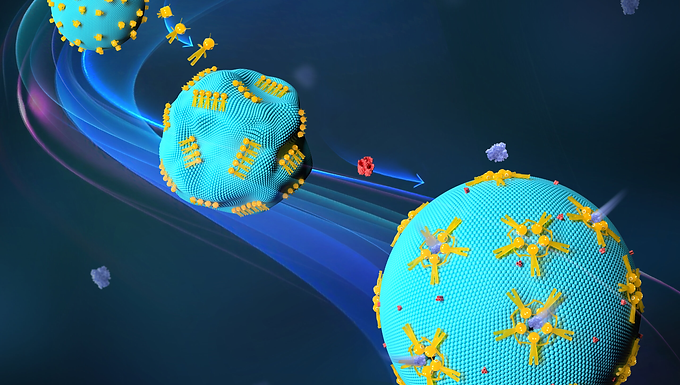
Recently, scientists at the University of Stuttgart have made a notable advancement in the field of synthetic biology. These scientists have found a way to control the form of biological membranes with the use of DNA nanotechnology. This research could make certain medical treatments more effective.
The nanotechnology used to control the structure of membranes uses DNA origami structures. These structures involve strands of DNA that have been specifically manipulated to form the desired structures. To create DNA origami, a long strand of DNA is first used as a scaffold. Then, shorter strands of DNA, called staples, are added along specific parts of the scaffold, which guide folding and thereby help manipulate the DNA into a certain shape. Using this procedure, scientists can use the deliberate “scaffolding” and “stapling” of DNA strands—combined with the right environmental stimuli—to fold the DNA into the desired shape to be used as a nanorobot (Ranji et al., 2013). The use of DNA origami is revolutionary because of its broad scope of potential applications. For example, the process of creating these nanostructures permits the self-assembly of the DNA origami structures. This means that when the strands are in the right conditions, they will be able to precisely fold and move into the desired shape that has been determined earlier using a computer program. This procedure creates the highly specific form of the nanostructure, enabling a much more effective impact on the environment. For example, the specific characteristics of each structure will result in different responses to external stimuli, which is crucial in order to fulfill the purpose of the nanostructures. Since the use of DNA origami is biodegradable and is derived from the body’s own structures, this technology is very safe.
At the University of Stuttgart, Professor Laura Na Liu and her team used these DNA origami structures as nanorobots that could alter artificial cells as a result of their specific shapes. The team designed the DNA nanobots so that they would interact with giant unilamellar vesicles (GUVs for short). GUVs are artificial but simple structures used to model actual cells. They are the same size as actual cells and are very helpful in research through testing interactions, such as with DNA origami (Fan et al., 2025). Researchers used DNA nanorobots to change the shape and the properties of GUVs. Liu says that the team’s work in fostering these interactions is “a milestone in the application of DNA nanotechnology to regulate cell behavior” (Universitaet Stuttgart, 2025). In practice, this technology could help create pathways in the cellular membrane to aid molecular transport. This would be a monumental advancement in drug delivery.
The future work involving DNA nanotechnology is limitless, especially when combined with existing advanced technologies. This technology could significantly improve gene therapy, drug delivery, and drug development. By using DNA origami to create channels in biological membranes, the precision and effectivity of drug delivery would increase dramatically. These channels would allow therapeutic molecules to reach a desired treatment area. Using DNA origami, these channels could be designed to close when needed, providing high control when delivering drugs. This control would enable the correct amount of drug delivery to the correct cells. The use of nanorobots would reduce unwanted side effects drastically, limiting when drugs are delivered in the wrong dosages or to the wrong places (Lee et al., 2011). Overall, DNA nanotechnology has enormous potential to improve medical treatments and create new ways of looking at medicine and biology.
References
Arnaz Ranji, Wu, J. C., Bundy, B. C., & Jewett, M. C. (2013). Transforming Synthetic Biology with Cell-Free Systems. 277–301. https://doi.org/10.1016/b978-0-12-394430-6.00015-7
DNA Origami - an overview | ScienceDirect Topics. (2025). www.sciencedirect.com. https://www.sciencedirect.com/topics/neuroscience/dna-origami
Fan, S., Wang, S., Ding, L. et al. Morphology remodelling and membrane channel formation in synthetic cells via reconfigurable DNA nanorafts. Nat. Mater. 24, 278–286 (2025). https://doi.org/10.1038/s41563-024-02075-9
Lee, S., Lee, K. H., Song, M., & Lee, D. (2011). Building the process-drug–side effect network to discover the relationship between biological Processes and side effects. BMC Bioinformatics, 12(S2). https://doi.org/10.1186/1471-2105-12-s2-s2
Universitaet Stuttgart. (2025, January 13). DNA nanorobots can alter artificial cells. ScienceDaily. Retrieved February 18, 2025 from www.sciencedaily.com/releases/2025/01/250113134758.htm