The Development of Non-Opioid Pain Medication: Suzetrigine (VX-548)
Grace Liang '28
On April 18, 2024, Vertex Pharmaceuticals Incorporated (VRTX) shared their accomplishment of developing the first FDA-approved non-opioid pain medication for moderate-to-severe acute pain known as Suzetrigine (VX-548) (Chittoria et al., 2025). Potentially the first new class of medicine for such pain in more than two decades, VX-548, marketed as Jornavx, is able to provide pain relief without the side effects commonly associated with opiate usage like physical dependence and addiction (Vertex Pharmaceuticals Incorporated [Vertex], 2024).
Sara Gehrig, a woman in her mid-40s, suffers from intense pain from her spinal stenosis condition which puts immense pressure on her spinal cord (Broadfoot, 2024). Over the counter pills such as ibuprofen have little efficacy on her suffering that flares up every so often, and her allergies to prescription opioids prevents her from taking more potent painkillers (Broadfoot, 2024). For patients like her, acute pain greatly impacts the possibility of an active lifestyle, making it hard to complete everyday tasks, resulting in increased morbidity (Chittoria et al., 2025). Over 80 million people in the United States of America seek prescriptions for their intense pain every year, yet there remains an unmet need of better treatment options without the debilitating effects of opioids (Vertex, 2024). Consequently, the opioid epidemic, the rapid increase of opioid drug addiction starting from the late 1990s, keeps getting worse, already claiming more than 730,000 overdoses in total, around 91 every day (Broadfoot, 2024). In response, in 2017, the White House described the opioid crisis as a public health emergency, gathering professionals and pharmaceutical giants around the country in an attempt to combat the issue (Broadfoot, 2024).
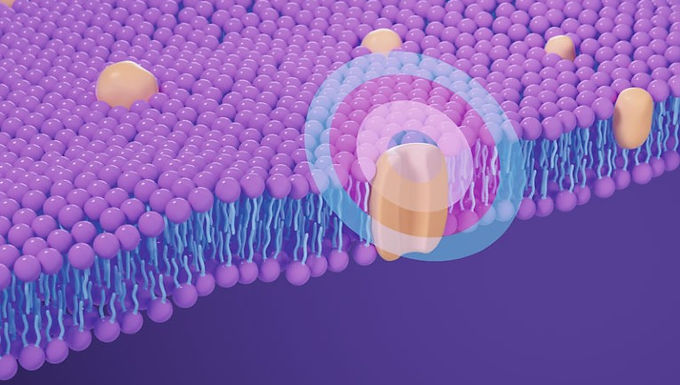
The researchers’ first course of action was trying to understand the cause of the acute pains that pushed excessive opioid usage. The body contains billions of pain-signaling nerve cells that act as an alarm system, alerting the mind to any physical dangers that arise (Broadfoot, 2024). The nerve cells send cues to create impulses up to the dorsal root ganglia cells beside the spine, then traveling all the way to the brain where the pain is finally registered (Chittoria et al., 2025). Along this pathway lies numerous sodium channels, which are cellular gates on the membranes of nerve cells that open to allow the generation of electric currents responsible for the nerve impulses (Broadfoot, 2024). In people with chronic pain, however, this path can malfunction, allowing excessive sodium into the cell, lowering the threshold for activation, or failing to close (Broadfoot, 2024). Therefore, scientists wish to target voltage-gated sodium channels (NaV) to prevent the feeling of pain, but as such gateways are also used to send signals in the body for muscle contraction and neural communication, it is risky to manipulate them (Broadfoot, 2024).
Around 20 years ago, there was a report released in China pertaining to a mutation in the SCN9A gene, which encodes a type of NaV, creating a rare condition called erythromelalgia that amplifies any pain felt (Broadfoot, 2024). In contrast, researchers in Pakistan discovered a contrasting mutation that extinguished the flow of pain-signaling nerve cells and resulted in numbness (Broadfoot, 2024). The revelation of identifying such mutations fueled a newfound effort to try to identify molecules to block NaV safely, with the intention to mutate the proteins to mitigate pain (Broadfoot, 2024). Until the early 2000s, none of the experimentally made compounds proved successful due to the nature of NaV, whose genes reassembled those of many other proteins in the body (Broadfoot, 2024). As such, any developed inhibitors of NaV were unable to target it specifically while ignoring other functions.
Vertex scientists Jesús González and Michael Maher engineered a new system to test compounds against one NaV rapidly called E-VIPR (Broadfoot, 2024). In contrast to other researchers, who traditionally used tedious methods like individually testing every single potential drug, E-VIPR was able to conduct the same process faster than the human eye can detect (Broadfoot, 2024).
In consequence, Suzetrigine was developed to inhibit specifically the NaV1.8 subtype, which is only expressed in the peripheral nervous system located outside the brain and spinal cord, acting as a communicator between the central nervous system in the brain and the rest of the body (Chittoria et al., 2025). As such, Suzetrigine is able to relieve pain without causing any major neurological side effects like opioids (Berryhill & Murdock, 2025). In an interview with NeurologyLive, Jessica Oswald, steering committee member at Vertex and pain management and emergency medicine professor at UC San Diego, revealed that VX-548 “offers an effective alternative to opioids, and it expands our nonopioid armamentarium,” hopefully reducing “a reliance on opioids, particularly in the perioperative and acute pain setting” (Ciccone & Meglio, 2025).
Despite its potential, Suzetrigine has currently only been tested in clinical trials, the environment of which lacking possible confounding factors like physical activity (Jones et al., 2023). Even though VX-548 has been proven to reduce pain levels, its administration has often caused some mild side effects like headache, nausea and constipation (Ciccone & Meglio, 2025). The treatment is still in development, remaining as a prescription drug for now until scientists make further developments for increased safety (Chittoria et al., 2025).
Even so, the compound has illustrated that this new mechanism of pain relief is possible, stimulating future advancements targeting peripheral receptors instead of central ones (Ciccone & Meglio, 2025). With no risk of addiction, Suzetrigine represents a significant step forward in pain treatment and a potential shift away from the harmful opioids that patients have no choice to rely on right now to survive. At this moment, other pain drugs targeting sodium channels are continually in development, and some scientists are even attempting to utilise gene-editing tools like CRISPR to achieve similar results.
References
Berryhill, D., & Murdock, J. (2025, January 31). Opioid Alternatives: Suzetrigine (Journavx) Offers a New Treatment Option for Pain. GoodRx. Retrieved May 6, 2026, from https://www.goodrx.com/conditions/pain/opioid-alternatives?srsltid=AfmBOoqTYz-ldMaWnXkJWfb1dGBDqJuL7uZWJPGc_HO1aUeNLORVGf3x/
Broadfoot, M. (2024, August 20). New Painkiller Could Bring Relief to Millions—Without Addiction Risk. Scientific American. Retrieved May 6, 2026, from https://www.scientificamerican.com/article/new-pain-medication-suzetrigine-prevents-pain-signals-from-reaching-brain/
Chittoria, K., Sharma, A., Kothari, N., & Kumari, K. (2025, June 16). Suzetrigine (VX-548): Bidding goodbye to opioids: The latest oral non-opioid analgesic for acute pain. National Library of Medicine: National Center for Biotechnology Information. Retrieved May 6, 2026, from https://pmc.ncbi.nlm.nih.gov/articles/PMC12240521/
Ciccone, I., & Meglio, M. (2025, January 30). FDA Approves Vertex Pharmaceuticals' Suzetrigine for Acute Pain Management. Neurology Live. Retrieved May 6, 2026, from https://www.neurologylive.com/view/fda-approves-vertex-pharmaceuticals-suzetrigine-acute-pain-management
Jones, J., Correll, D. J., Lechner, S. M., Jazic, I., Miao, X., Shaw, D., Simard, C., Osteen, J. D., Hare, B., Beaton, A., Bertoch, T., Buvanendran, A., Habib, A. S., Pizzi, L. J., Pollak, R. A., Bozic, C., Weiner, S. G., Negulescu, P., & White, P. F. (2023, August 2). Selective Inhibition of NaV1.8 with VX-548 for Acute Pain. The New England Journal of Medicine. Retrieved May 6, 2026, from https://www.nejm.org/doi/full/10.1056/NEJMoa2209870
Vertex Pharmaceuticals Incorporated. (2024, April 18). Vertex Announces Advancements of Suzetrigine (VX-548) in Acute and Neuropathic Pain. Vertex Pharmaceuticals Incorporated. Retrieved May 6, 2026, from https://investors.vrtx.com/news-releases/news-release-details/vertex-announces-advancements-suzetrigine-vx-548-acute-and