Digital Twins
Shreshta Agrawal '28
Digital Twins
Shreshta Agrawal ’28
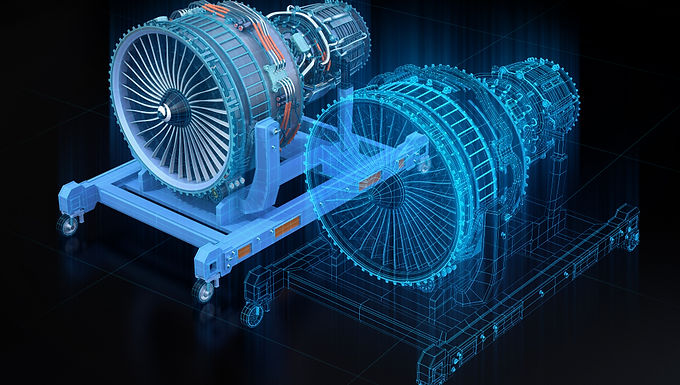
In early April 1970, three moon-bound astronauts found themselves stranded in space after an oxygen tank explosion damaged their spacecraft’s engines. They awaited a signal of hope from thousands of miles away. On Earth, National Aeronautics and Space Administration (NASA) engineers puzzled over a strategy for the astronauts’ safe return: how could they fix the craft without touching it? All too aware of time limits, NASA designed a digital model of the Apollo 13 craft based on data of the accident, which allowed engineers to test solutions with efficiency. Later, all astronauts returned safely less than a week after takeoff (De Silva, 2025). Although Apollo 13 did not reach the moon, the model used to rescue its spacecraft laid technological foundations for digital twins (DT) even decades later. Coined in 2022 by American scientist and writer Michael Grieves, the term “digital twin” describes a digital model that records precise data from a physical object, placing emphasis on a mutualistic relationship between the physical and digital objects: simulations run digitally can result in changes to the object (Grieves & Wickers, 2016). Soon after DTs emerged, former CEO of energy company GE Digital predicted that all people would “have a digital twin at birth” (Browne, 2022). Although DTs are not yet applied universally, their rapid development indicates that they will be a leading driver in data collection and problem solving for countless fields.
DTs are more than just three-dimensional structures: their data-collection processes and integration of artificial intelligence (AI) technology make them some of the most precise and adaptable representations of the physical world. Most DTs mirror corresponding objects using Internet of Things (IOT) sensors. The IOT is a “network” of physical objects that use sensors to gather and share information—for example, a car controlled via phone (“What is the Internet,”
n.d.). In the case of DTs, attached sensors record changes in the physical object in real time. This physical data, once transferred to a digital platform, can be accessed more easily over the internet and used in simulations. In the case of Apollo 13, simulations on an early form of DT allowed for a low-stakes environment where spacecraft return methods could be tested.
Today, sensors can be used almost anywhere. Attached to engines, they can measure vehicle health over time and can even “signal the need for machinery to be fixed or upgraded before impacting operations” (“How digital twins,” n.d.). Though they do not eliminate human interference, DTs reduce the need for humans to monitor hardware, as they can do so with greater speed and precision. Since DTs are often used in cases that require problem-solving regarding the physical object, many DTs are integrated with AI. AI describes “the ability of a computer program or a machine to think and learn similar to humans” (“Artificial Intelligence,” n.d.). Using logical reasoning, AI predicts problem-solving paths based on the data DTs collect, which may further reduce the need for human reasoning (Kreuzer et. al, 2024). Specifically, researchers are exploring the integration of DTs and generative AI, which is a type of AI that produces content—such as words, pictures, or audio—based on observations of existing content. Despite being only tested together in recent years, generative AI makes simulations involving a DT “more comprehensive,” allowing DT users to make well-informed decisions before they modify physical objects (Digital Twin Market, 2025).
DTs’ linkages to live data and their compatibility with AI make them ideal tools for testing and problem-solving across fields. The technology and AI company NVIDIA explores this connection: they integrate both AI and DTs on their simulation platform NVIDIA Omniverse. After users build DTs of robots, for example, the platform’s AI extensions allow for sensor data and even live video analysis, helping users make quick developmental or safety
decisions and ensuring that users take advantage of the best physical technology possible (The Value of Industrial Digital Twins, n.d.).
In addition to modeling inanimate objects, DTs can recreate complex organisms with unprecedented efficiency. In 2013, the French DT company Dassault Systèmes, which initially developed architectural and automobile models, launched the Living Heart project—a DT of the human heart. At the time, most heart models existed in small-scale projects or only focused on limited regions of the organ. To address this issue, Living Heart combined scientific data of “electricity, mechanics, and blood flow” from multiple research groups (Scoles, 2025). Released in 2015, Living Heart converts 2D scans of a person’s heart into a “personalized full-dimensional model,” including 3D representations of diseases and defects built into the heart (Scoles, 2025). The technology is ideal for doctors looking to test treatments as quickly as possible while minimizing stress on patients’ bodies. In fact, Living Heart partnered with the United States Food and Drug Administration (FDA) between 2016 and 2021 in order to expand the DT technology’s applications. Tina Morrison, then-Deputy Director for the FDA’s Division of Applied Mechanics, stated that digital models like Living Heart could “support evidence of [treatment] effectiveness [...] and assess product safety” among other things, in a way that has “already been shown to produce similar results as human clinical trials” (Dassault Systèmes, 2019). Even though DTs do not yet provide a complete picture of patients or medical testing, they have improved the crucial understanding of the human body in medical research.
DTs, however, are not only limited to replicating intricate organs; they also make cultural landmarks more accessible to people worldwide. Cultural heritage researchers, who specialize with the preservation and understanding of historical artifacts, are using DTs to map physical locations. In 2023, researchers at Lindenwood University used DTs to map the Church of Santi
Apostoli in Florence, Italy. After collaborating with local experts from the Archaeological Museum of Fiesole, the researchers used specialized cameras to map the church in three dimensions. Recording at a height and along a path similar to that of a visitor, the cameras made the church’s DT accessible through virtual reality (VR), laying the groundwork for subsequent 3D characterizations of historical architecture (Lowood, 2026). After the Church of Santi Apostoli was mapped, however, researchers had to choose between different VR headsets to develop the DT for due to a lack of uniform technology between brands. Nevertheless, given their study’s success, the researchers emphasized the need for DT education among cultural heritage experts, so the technology can be similarly employed in future projects (Hutson et. al, 2023).
Both the Living Heart and the Lindenwood’s Church of Santi Apostoli project highlight the need for increased DT accessibility for developers and users. Specifically, the next step in advancing DTs is to improve its consistency, as illustrated by the countless small-scale models Living Heart had to process, the issue with VR adaptability that preoccupied Lindenwood researchers, and a lack of standardized DT education. Researchers need to fill gaps in software and data with the help of research groups, companies, and governments, many of whom are not willing to contribute funding or share information for general research access. Despite facing setbacks, some researchers have found ways to combat this knowledge barrier.
For example, in 2023, a United States Forces Japan military base collaborated with Japan-based engineers to assess a network of on-base electrical stations, hoping to create a DT of the base (McMurtrey, 2025). Realizing how limited communication between the U.S. and Japan hindered on-base maintenance assessments, experts in both locations worked together to collect and analyze equipment data (McMurtrey, 2025). U.S. and Japan-based experts used time zone
differences—a source of communication difficulty—to their advantage when evaluating data; the workday in one region began as the second region’s workday ended, meaning experts could expedite data evaluation through consistent data sharing. In fact, over the course of the project, “more than 150 electrical stations were assessed within three weeks” (McMurtrey, 2025). According to a 2023 report, the data did not complete a DT but “laid the groundwork” for one in the future (McMurtrey, 2025). U.S. Forces Japan’s project marks a step forward in breaking legal barriers in creating DTs, demonstrating the efficient advancement research groups gain through communication.
Furthermore, the rapid advancement of DTs raises questions about law and ethics. In recent years, people have speculated about the development of a “personal digital twin,” meaning a DT modelled on a human’s body and habits (Teller, 2021). Considering that a large portion of DT developments have been made in biology, with researchers model parts of living human beings, the personal DT is not unattainable. As their possibility comes into view, legal experts are questioning how laws would apply to personal DTs, as these DTs would be intimately linked to peoples’ own bodies. First and foremost, legal experts expect different countries’ data privacy laws to apply, since DTs are at their base a data set. In the European Union, the General Data Protection Regulation (GDPR) calls for transparency and adherence to requests from the data’s owner, enabling owners to control if and when their data is erased, but it does not mention DTs specifically (Teller, 2021). In healthcare, where many DTs are used now, DTs labelled as medical devices will have to follow country-specific medical regulations besides general data-protection ones like the GDPR. France, for instance, is pushing towards laws that require human supervision of medical DTs, preventing AI and DTs from making decisions without
trained professionals; without these laws, it would be unclear whom to hold responsible if solutions put a real person in danger (Teller, 2021).
Since their emergence in the late 20th century, DTs have extended researchers’ capabilities beyond what was thought possible less than a century ago. DTs’ linking of the physical and the digital holds unprecedented importance in today’s digitalized society. Still, because of DTs’ growing power to change human beings and the real world, users must be cautious of how much they rely on the groundbreaking technology to guide their everyday lives.
References
(2019, July 24). Dassault Systèmes and the FDA Extend Collaboration to Inform Cardiovascular Device Review Process and Accelerate Access to New Treatments. Dassault Systèmes. Retrieved from
https://www.3ds.com/newsroom/press-releases/dassault-systemes-and-fda-extend-collabo ration-inform-cardiovascular-device-review-process-and-accelerate-access-new-treatment s
(2025, December 9). Digital Twin Market Size, Share & Industry Analysis, By Type (Parts Twin, Product Twin, Process Twin, and System Twin), By Application (Predictive Maintenance, Business Optimization, Product Design & Development, and Others), By Enterprise Type (Large Enterprises and SMEs), By End-user (Aerospace & Defense, Automotive &
Transportation, Manufacturing, Healthcare, Retail, Energy & Utilities, Real Estate, IT and Telecom, and Others), and Regional Forecast, 2025 – 2032. Fortune Business Insights. Retrieved from
https://www.fortunebusinessinsights.com/digital-twin-market-106246.
Behgounia, F. & Zohuri, B. (2023). Chapter 8 - Application of artificial
intelligence driving nano-based drug delivery system. A Handbook of Artificial Intelligence in Drug Delivery, 145-212. Retrieved from
https://www.sciencedirect.com/science/chapter/edited-volume/abs/pii/B97803238992530 00071
Browne, G. (2022, Feb 15). The Quest to Make a Digital Replica of Your Brain. Wired. Retrieved from
https://www.wired.com/story/the-quest-to-make-a-digital-replica-of-your-brain/
De Silva, S. (2024, May 3). Explainer: Digital twins. International Water Management Institute. Retrieved from https://www.iwmi.org/news/digital-twins/
Grieves, M. & Vickers, J. (2016, August). Origins of the Digital Twin Concept. ResearchGate. Retrieved from https://doi.org/10.13140/RG.2.2.26367.61609 How digital twins are driving the future of engineering. Nokia. Retrieved from https://www.nokia.com/thought-leadership/articles/how-digital-twins-driving-future-of-e ngineering/
Hutson, J., Weber, J., & Russo, A. (2023). Digital Twins and Cultural Heritage Preservation: A Case Study of Best Practices and Reproducibility in Chiesa dei SS Apostoli e Biagio. Art and Design Review, 11, 15-41. Retrieved from https://doi.org/10.4236/adr.2023.111003
Kreuzer, T., Papapetrou, P., & Zdravkovic, J. (2024, May). Artificial intelligence in digital twins—A systematic literature review. Data & Knowledge Engineering, 151. Retrieved from https://www.sciencedirect.com/science/article/pii/S0169023X24000284
Lowood, H.E. (2026, January 10). virtual reality. Encyclopedia Britannica. Retrieved January 12, 2026 from https://www.britannica.com/technology/virtual-reality
McMurtrey, R. (2025, October). Next Steps for Digital Twin Development. The Military Engineer, 117 (759), 68-69. Retrieved from https://www.jstor.org/stable/48837572 Scoles, S. (2016, February 10). A Digital Twin of Your Body Could Become a Critical Part of Your Health Care. Slate. Retrieved from
https://slate.com/technology/2016/02/dassaults-living-heart-project-and-the-future-of-digi tal-twins-in-health-care.html
Teller, M. (2021, October). Legal aspects related to digital twin. Philosophical Transactions:
Mathematical, Physical, and Engineering Sciences, 379 (2207), 1-7. Retrieved from https://doi.org/10.1098/rsta.2021.0023
The Value of Industrial Digital Twins. NVIDIA. Retrieved from
https://www.nvidia.com/en-us/use-cases/industrial-facility-digital-twins/ What is the Internet of Things (IoT)?. International Business Machines. Retrieved January 12, 2026, from https://www.ibm.com/think/topics/internet-of-things