Medical Digital Twins: The Virtual You
Katherine Qiu '27
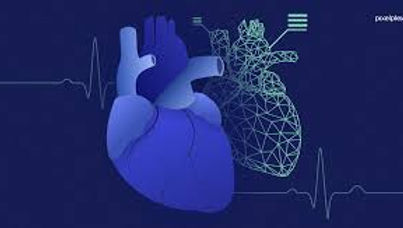
The concept of a digital twin dates back to NASA’s 1960 Apollo 13 mission, where the team simulated conditions that could safely return the spacecraft to Earth after suffering a malfunction (Sadée et al., 2025). Today, the digital twin has emerged in the medical field, with practitioners envisioning a myriad of benefits from personalizing patient treatment to easing hospital workflow. At the same time, researchers also raise ethical questions about the use of artificial intelligence when dealing with private data and the possibility of malpractice.
Medical digital twins are essentially virtual models of a patient that synthesize their medical data and update it based on real-time data. The twin can be broken down into five major components: the patient, a data connection, patient-in-silico, interface, and twin synchronization (Handler, 2025). The patient-in-silico is the virtual model that simulates biological processes using the data collected from the patient. Clinicians are able to interact with the patient-in-silico through a possibly AI-powered interface, such as ChatGPT, while also assessing the reliability of the models. Lastly, the twin synchronization ensures that data is continuously updated to reflect the patient’s evolving health (Handler, 2025).
Currently, this novel technology is mostly used in oncology research and to mitigate unequal outcomes in healthcare. In oncology, a branch of medicine specializing in cancer, medical digital twins merge patient data into a model that predicts a tumor’s resistance to build up and, in turn, inform treatment approaches. In a clinical trial surrounding prostate cancer, a group of researchers from the Moffitt Cancer Center and Research Institute used the Lotka-Volterra equations, a type of growth model, to visualize tumor growth, predict future growth, and stimulate growth based on different dosage intervals (Sadée et al., 2025). Using data
extracted from the model, the treatment was halted once prostate-specific antigen levels fell below 50% and resumed once they exceeded that threshold, effectively preventing the development of treatment resistance (Sadée et al., 2025).
In addition to the digital twin’s benefits to medical research, it can also be used to bridge the gap created by a lack of access to necessary healthcare. A shortage of physicians is an increasingly prominent issue both within and outside of the United States, rendering diligent patient care almost impossible. In fact, 4.9% of physicians left clinical practice in 2019 as compared to 3.5% in 2013, with a staggering projected physician shortage of 86,000 doctors in 2036 (Samraik, 2025). The ADVICE4U clinical trial employed an AI-based decision support system (AI-DSS) that consistently monitored blood glucose levels and adjusted insulin therapy methods accordingly (Katsoulakis et al., 2024). Physicians who were surveyed about using the AI-DSS claimed that its recommendations were reliable, helped save time, and bolstered patient communication about dosing decisions, a critical improvement in communities with limited access to healthcare (Katsoulakis et al., 2024). Given that the medical digital twin is still in its early stages of development, future iterations, such as analyzing nutritional and exercise effects, are also indispensable to allow the usage of the digital twin to reach its full potential.
Even as the medical digital twin has shown success in its early development, there are still numerous shortcomings that researchers must overcome. Since the digital twin is based primarily on the patient, sharing sensitive information with the model is inevitable. In his research paper “Medical digital twins: enabling precision medicine and medical artificial intelligence,” Stanford-based data scientist Christoph Sadée writes, “[beyond] rigorous testing frameworks to assess their accuracy, reliability, and uncertainty,” the model must also “provide transparency on its predictions, its limitations, and how much confidence physicians and patients can place in digital twin predictions.” Some recommend using blockchain and DLT (Distributed Ledger Technology) to store data in a decentralized and secure way (Katsoulakis et al., 2024). Others believe that setting strict governance structures is necessary to ensure that digital twins comply with ethical regulations (Katsoulakis et al., 2024). Additionally, these digital twins are largely reliant on real-time data; therefore, balancing patient consent with the most effective outcome is another barrier that must be overcome (Handler, 2025). Researchers also raised concerns about who the blame rests on if the AI model’s prediction results in an error. As a result, there is a need for more clinical trials to confirm the validity of AI medical predictions, given the current stigmatization surrounding the technology.
Ultimately, the implementation of digital twins is a double-edged sword. While it may confer great benefits for patients and practitioners alike, additional ethical concerns and shortcomings must be addressed before the medical digital twin can earn the trust of all those involved.
References
Handler, R. (2025, June 16). The Virtual You. Stanford Medicine. Retrieved October 12, 2025, from
https://med.stanford.edu/medicine/news/current-news/standard-news/medical-digital-twin s.html
Katsoulakis, E., Wang, Q., & Wu, H. (2024). twins for health: a scoping review. Digit. Med., 7(77). https://doi.org/10.1038/s41746-024-01073-0
Sadée, C., Testa, S., Barba, T., Hartmann, K., Schuessler, M., & Thieme, A. (2025). Medical digital twins: enabling precision medicine and medical artificial intelligence. Health Policy, 7(7). https://doi.org/10.1016/j.landig.2025.02.004
Samraik, M. (2025, October 7). Increases in Physician Attrition Rates Could Worsen Shortages. Yale School of Medicine. Retrieved October 13, 2025, from
https://medicine.yale.edu/news-article/increases-in-physician-attrition-rates-could-worsen -shortages/