Plastic-Eating Microbes: Engineered Bacteria Fixing Pollution
Catherine Wei '29
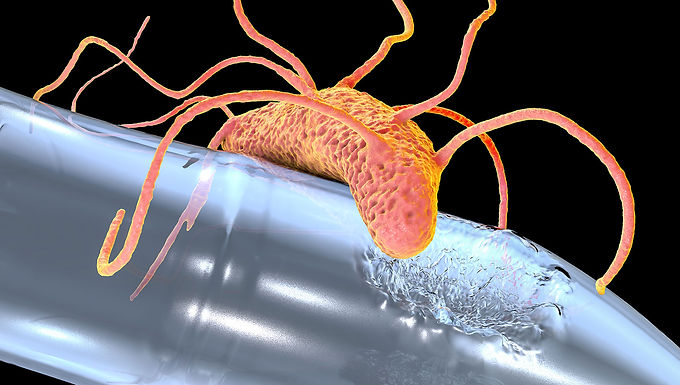
Microbes are a group of living organisms that are small in size and can only be observed under microscopes. Recently, scientists have discovered certain microbes that can degrade plastics, a material that would have otherwise persisted in our environment for centuries. From climate change to biodegradation, many environmental crises all originate from the same problem: plastic pollution. Today, plastics have become an integral part of our lives. Around 359 million tons of plastic are produced annually worldwide, and more than half of that cannot be broken down naturally. Consequently, the plastics end up in landfills and transform into microplastics, which then enter the food chain and threaten ecosystem health (Jehmlich, 2023). Through studying specific enzymes in various microbial species, scientists are improving the efficiency of plastic degradation. While the results look promising for the environment, policy challenges and ecological impacts need to be considered in order for the microbial remediation of plastics to become a large-scale tool.
To begin, the biodegradation of plastics occurs through three principal steps: first, microbes attach to the plastic and form sticky substances called biofilms; then, the microbes within the biofilm release specific enzymes that break down the plastic into smaller molecules; finally, these harmful products are converted into carbon dioxide and water, which are released into the environment.
This technology was first introduced in 2016, when researchers in Japan noticed that bacteria Ideonella Sakaiensis could grow on PET plastic. They found that the bacteria used two enzymes—PETase and MHETase—to break the plastic into smaller pieces, converting them to their pre-plastic form, terephthalic acid and ethylene glycol. PETase is able to break down the
complex crystalline PET into MHET, and MHETase then breaks down the plastic further into its original form (Burgin et al., 2024). This discovery marked the start of plastic biodegradation technologies, proving that enzymes and living organisms have the ability to adapt and alter their cellular functions to attack synthetic polymers.
Currently, microbes have gone beyond breaking down normal types of plastic. Recent research shows that certain microbes can now degrade medical-level plastics. Additionally, genetically engineered bacteria have been demonstrated to survive saltwater environments, and AI is becoming a commonly used tool within the engineering process. Yet, despite the promise microbes hold in alleviating widespread plastic contamination, critical environmental concerns challenge the wider use of this technology. First, the rate of microbial degradation is too slow to keep up with the large amount of plastic being produced and discarded every day. Commonly used plastics, such as bottles, bags, and fishing gear, still take years to degrade even with microbial help, which means that it will take hundreds of years for the plastics currently in landfills, oceans, and terrestrial ecosystems to show a noticeable reduction. This mismatch demonstrates that microbes are only just one part of the solution to the plastic crisis. Another concern is that releasing genetically engineered microbes or cultivating a specific microbial species to degrade plastics might disrupt the balance of the ecosystem, as the “plastic-eating” microbes could outcompete the native microbial species for resources. Ecosystem imbalances would in turn lead to changes in decomposition and mineralization, both of which are crucial processes for the existence of marine life (Cai et al., 2023).
To overcome the aforementioned challenges, scientists are actively seeking solutions to improve the limitations of this biotechnology. Protein engineers and biotechnologists used two main approaches to improve the PET-degrading enzymes: rational design, which disregards
distant mutation, but attempts to make targeted changes only after understanding the enzyme’s basic structure; and directed evolution, which lacks clear concepts, but makes numerous changes in order to select the best one (Dhali et al., 2024).
While science opens a new door to change, it is humanity’s role to follow through with what scientific research unveils. The discovery of plastic-eating microbes marks a big step toward solving plastic pollution; however, this technology is not a perfect solution and cannot resolve the crisis alone. A lasting change will only happen through a collective commitment to create a more sustainable and cleaner future for all.
References
Buranyi, S. (n.d.). When a microbe was found munching on a plastic bottle in a rubbish dump, it promised a recycling revolution. now scientists are attempting to turbocharge those powers in a bid to solve our waste crisis. but will it work? The Guardian. October 8, 2025.
https://www.theguardian.com/environment/2023/sep/28/plastic-eating-bacteria-enzyme-r ecycling-waste
Dhali, S.L., Parida, D., Kumar, B. et al. Recent trends in microbial and enzymatic plastic degradation: a solution for plastic pollution predicaments. Biotechnol Sustain Mater 1, 11 (2024). https://doi.org/10.1186/s44316-024-00011-0
Jehmlich, N. (Ed.). (2023, June 26). Biological degradation of plastics and microplastics: A recent perspective on associated mechanisms and influencing factors. PMC PubMed Central. Retrieved October 8, 2025, from
https://pmc.ncbi.nlm.nih.gov/articles/PMC10386651/
Petersen, D. E. (Ed.). (2024, May 7). Improving plastic degrading enzymes via directed evolution. National Library of Medicine. Retrieved October 7, 2025, from https://pmc.ncbi.nlm.nih.gov/articles/PMC11091475/
Yoshida, S., Hiraga, K., Takehana, T., Taniguchi, I., Yamaji, H., Maeda, Y., Toyohara, K., Miyamoto, K., Kimura, Y., & Oda, K. (2016). A bacterium that degrades and assimilates poly(ethylene terephthalate). Science, 351(6278), 1196-1199.
https://doi.org/10.1126/science.aad6359